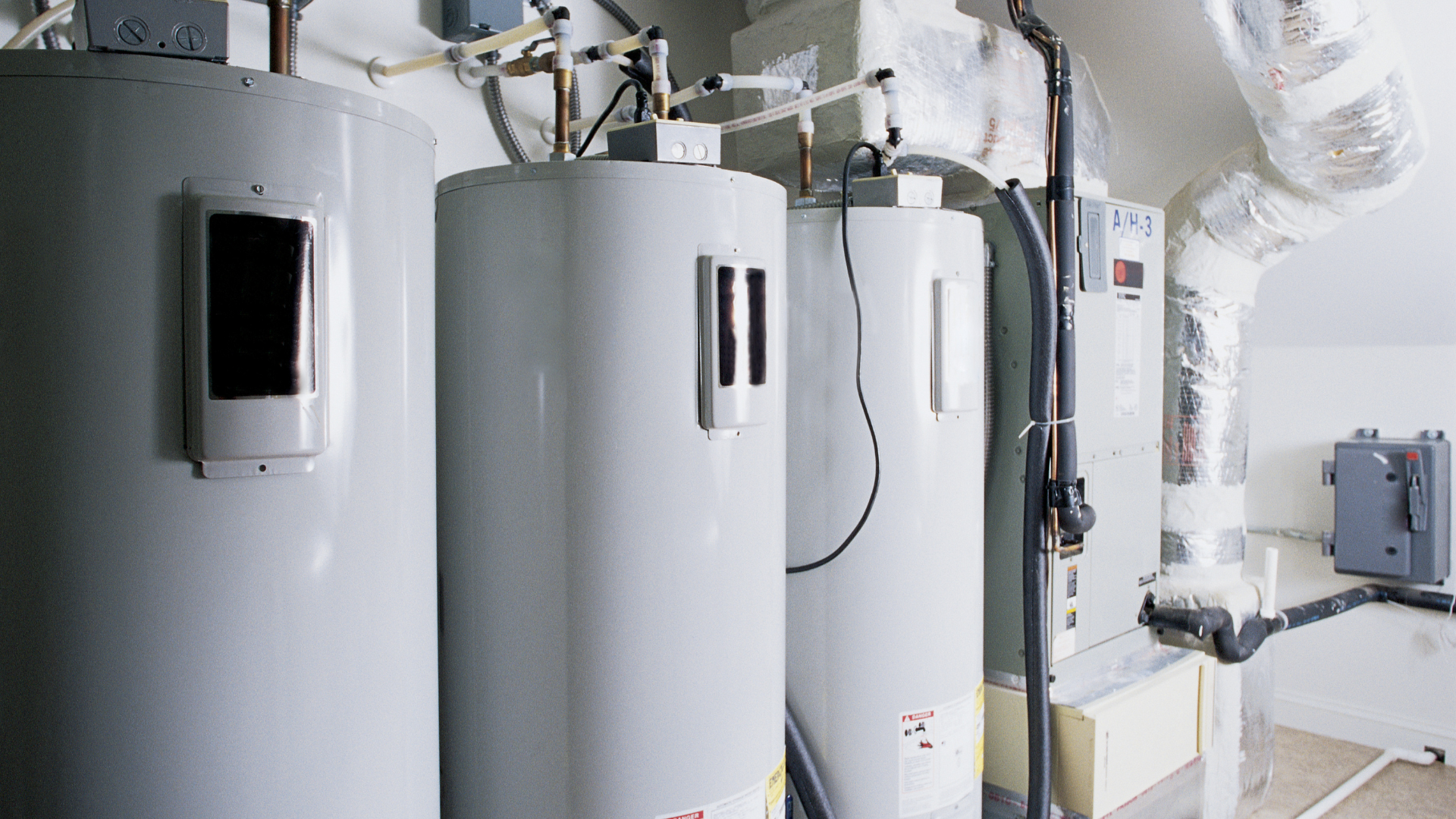
For many commercial facilities, hot water isn’t just a convenience—it’s essential to daily operations. Restaurants need it for dishwashing and food preparation, hotels rely on it for guest comfort, healthcare facilities require it for sanitation, and gyms, schools, apartment buildings, and manufacturing plants all depend on a consistent hot water supply.
When your commercial water heater runs out of hot water, operations can quickly be disrupted. Employees may be unable to perform critical tasks, customers may experience delays, sanitation standards can suffer, and equipment downtime can lead to lost productivity and higher operating costs.
In many cases, the problem isn’t simply that the water heater is “too small.” Commercial hot water shortages are often caused by increased demand, slow recovery rates, sediment buildup, failing components, or aging equipment that can no longer keep up with your facility’s needs.
In this guide, you’ll learn:
- Why your commercial water heater loses hot water so quickly
- The most common causes of commercial hot water shortages
- What facility managers can safely inspect
- When it's time to repair, upgrade, or replace your system
Quick Answer: Why Does a Commercial Water Heater Run Out of Hot Water?
Signs Your Commercial Water Heater Can't Keep Up
A commercial water heater that struggles to meet demand usually shows warning signs before complete failure. Recognizing these symptoms early can help prevent unexpected downtime and expensive emergency repairs.
Common signs include:
- Hot water runs out during peak business hours
- Long recovery times between periods of heavy use
- Water temperature fluctuates throughout the day
- Lukewarm water at multiple fixtures
- Frequent complaints from employees, tenants, or customers
- Multiple sinks, showers, or equipment losing hot water simultaneously
- Utility costs continue to rise without increased usage
- Discolored water or unusual odors
- Rumbling, popping, or banging noises from the tank
8 Common Causes of Commercial Hot Water Shortages
1. Increased Hot Water Demand Has Exceeded System Capacity
One of the most common reasons a commercial water heater runs out of hot water is that the building has simply outgrown the original system.
As businesses expand, hot water demand often increases due to:
- Additional employees
- Business growth
- Facility renovations
- New kitchens or restrooms
- More guest rooms or apartments
- Extended operating hours
- Increased occupancy
For example, a restaurant that has doubled its seating capacity or a hotel that consistently operates at higher occupancy may place significantly greater demands on its water heating system than it was originally designed to handle.
When peak demand exceeds the system’s storage capacity and recovery rate, occupants may experience inconsistent hot water, especially during busy periods.
Tip: If your facility has expanded over the years, it may be time to evaluate whether your current water heater is still properly sized for your operational needs.
2. Sediment Buildup Inside the Storage Tank
Sediment accumulation is one of the most overlooked causes of commercial hot water supply issues.
Minerals naturally found in water—such as calcium and magnesium—settle at the bottom of storage tanks over time. This is especially common in areas with hard water.
As sediment builds up, it can:
- Reduce usable tank capacity
- Insulate the burner or heating elements
- Increase heating time
- Reduce energy efficiency
- Increase fuel consumption
- Accelerate wear on the tank
- Longer recovery times
- Reduced hot water availability
- Rumbling or popping sounds
- Rising utility bills
- Inconsistent water temperatures
3. Heating Elements or Gas Burners Are Failing
Whether your facility uses an electric or gas-powered commercial water heater, the heating components must operate efficiently to maintain an adequate hot water supply.
Electric Water Heaters
Electric systems rely on one or more heating elements to warm the stored water.
Common problems include:
- Burned-out heating elements
- Loose electrical connections
- Damaged wiring
- Failed high-limit switches
A failed heating element often reduces the system’s ability to recover after periods of heavy demand.
Gas Water Heaters
Gas-fired commercial water heaters depend on burners to transfer heat efficiently.
Common burner issues include:
- Dirty burner assemblies
- Weak burner flame
- Ignition problems
- Clogged burner ports
- Gas supply issues
If burners cannot generate sufficient heat, the tank may struggle to recover during peak operating hours.
Common Symptoms
- Hot water runs out faster than usual
- Longer recovery time
- Water never reaches the desired temperature
- Inconsistent water temperature
- Higher fuel or electricity usage
4. Thermostat Problems
The thermostat controls how hot the water is heated and when the system begins a new heating cycle.
If the thermostat isn’t functioning correctly, the water heater may stop heating too soon or fail to reach the desired temperature.
Common thermostat-related issues include:
- Incorrect temperature settings
- Faulty temperature sensors
- Calibration errors
- Failed thermostat controls
- Safety shutoffs caused by overheating
- Water isn't consistently hot
- Temperature changes throughout the day
- Heater cycles more frequently than normal
- Recovery takes longer than expected
5. Recovery Rate Is Too Slow
A commercial water heater’s recovery rate refers to how quickly it can reheat water after hot water has been used. In high-demand facilities, recovery rate is often just as important as storage capacity.
If recovery is too slow, occupants may run out of hot water during peak operating hours, even if the storage tank is large enough.
This is especially common in:
- Restaurants during lunch and dinner rushes
- Hotels during morning showers
- Fitness centers after busy workout periods
- Healthcare facilities with continuous hot water demand
- Hot water returns after waiting 15–30 minutes
- Water temperature drops during peak usage
- System performs normally during off-peak hours
6. Water Heater Is Undersized
Even a properly functioning water heater will struggle if it wasn’t sized correctly for the building.
Commercial water heaters should be selected based on factors such as:
- Peak hourly hot water demand
- Number of fixtures
- Simultaneous water usage
- Building occupancy
- Business type and operating hours
- Hot water shortages every day
- Problems occur during busy hours
- System runs almost continuously
- No improvement after repairs
7. Aging Equipment
Like any mechanical system, commercial water heaters become less efficient as they age.
Over time, components wear out, corrosion develops, and overall performance declines.
Most commercial water heaters have an expected service life of approximately 10–15 years, depending on water quality, usage, maintenance, and equipment type.
As systems age, facility managers may notice:
- Longer recovery times
- Frequent repairs
- Reduced efficiency
- Higher utility costs
- Inconsistent water temperatures
8. Poor Preventive Maintenance
Routine maintenance is one of the most effective ways to prevent commercial hot water shortages.
Without regular inspections, small issues can gradually reduce performance and lead to unexpected failures.
A commercial maintenance program typically includes:
- Flushing storage tanks
- Cleaning burners
- Inspecting heating elements
- Testing thermostats
- Checking pressure relief valves
- Inspecting expansion tanks
- Verifying recirculation system performance
- Checking for leaks and corrosion
Commercial Water Heater Troubleshooting Checklist
✔ Check Thermostat Settings
Confirm the temperature is set appropriately for your facility’s operational needs and hasn’t been adjusted accidentally.
✔ Verify Fuel or Power Supply
Ensure the unit has an uninterrupted gas or electrical supply and check for any tripped breakers or shut-off valves.
✔ Look for Visible Leaks
Inspect around the tank, piping, and valves for water leaks, corrosion, or moisture.
✔ Listen for Unusual Noises
Popping, rumbling, or banging sounds often indicate sediment buildup inside the tank.
✔ Consider Recent Changes in Demand
Ask whether your facility has recently experienced:
- Increased occupancy
- Additional fixtures
- Business expansion
- Seasonal demand increases
✔ Inspect the Recirculation System
If your building has a recirculation pump, verify that it appears to be operating normally and that occupants aren’t experiencing excessive wait times for hot water.
Do not attempt to repair gas burners, electrical components, pressure relief valves, or commercial plumbing systems unless you are qualified to do so. These systems should only be serviced by trained commercial plumbing professionals.
When Should You Call a Commercial Plumbing Contractor?
While basic inspections can help identify obvious issues, many commercial hot water problems require specialized diagnostic equipment and expertise.
Contact a commercial plumbing contractor if you experience:
- Complete loss of hot water
- Repeated hot water shortages
- Water leaking from the tank or piping
- Water heater takes significantly longer to recover
- Burning smells or electrical issues
- Pilot light won't remain lit (gas systems)
- Persistent low hot water pressure
- Unusual noises that continue after maintenance
- Frequent shutdowns or system faults
For businesses that rely on continuous hot water—such as restaurants, hotels, healthcare facilities, and manufacturing operations—prompt repairs can help minimize downtime and avoid disruptions to daily operations.
At Norse Mechanical, our commercial plumbing specialists diagnose and repair water heater issues for businesses across Minnesota. Whether the problem involves storage tanks, tankless systems, boilers, recirculation systems, or commercial plumbing infrastructure, we provide practical solutions that restore reliable hot water while helping reduce long-term operating costs.
Repair vs. Replace: Which Makes More Financial Sense?
Not every commercial water heater problem requires a full system replacement. In many cases, replacing a faulty thermostat, heating element, burner, or recirculation pump can restore performance. However, if your equipment is aging, inefficient, or no longer meets your facility’s demand, replacement may provide better long-term value.
| Repair If… | Replace If… |
|---|---|
| Minor component has failed | Tank is leaking or severely corroded |
| System is less than 10–12 years old | System is over 15 years old |
| Repair costs are relatively low | Frequent breakdowns and rising repair costs |
| Current capacity meets building demand | Building has outgrown the existing system |
| Overall efficiency is still good | Operating costs continue to increase |
Conclusion
If your commercial water heater runs out of hot water too quickly, the problem is often related to increased demand, slow recovery rates, sediment buildup, failing components, recirculation issues, or an aging system.
Addressing these issues early can help reduce downtime, improve energy efficiency, extend equipment life, and prevent costly disruptions to your business operations.
While facility managers can perform basic inspections, persistent hot water shortages should be evaluated by an experienced commercial plumbing contractor to determine whether repair, system upgrades, or replacement is the best long-term solution.
Need Commercial Water Heater Repair in Minnesota?
Reliable hot water is essential for keeping your business running smoothly. Whether you manage a restaurant, hotel, healthcare facility, apartment complex, manufacturing plant, or commercial property, unexpected hot water shortages can quickly impact operations.
At Norse Mechanical, we provide expert commercial water heater repair, maintenance, replacement, and system upgrades for businesses throughout Minnesota. Our experienced technicians diagnose problems efficiently and recommend solutions that improve reliability, energy efficiency, and long-term performance.
If your commercial water heater can’t keep up with demand, contact Norse Mechanical today to schedule a professional inspection and restore dependable hot water to your facility.